
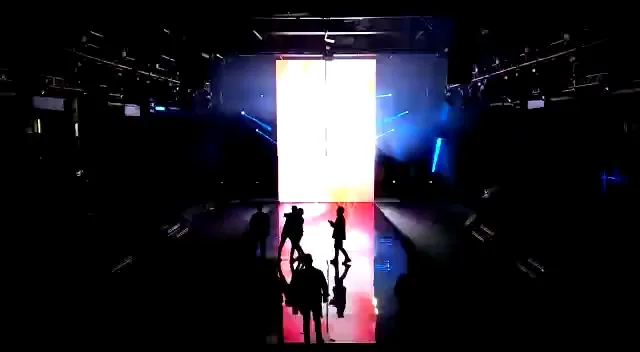
VEHICLE LAUNCHES & REVEALS
Automotive Reveal Production in Miami & South Florida
LED walls, floors, scenic video, cameras, lighting and show-control support for vehicle reveals and dealer events.
Tell us the reveal you have in mind, even if the venue, dimensions, or program are still undecided. We plan around vehicle access, loads, audience sightlines, rehearsals, and the reveal cue, identifying the information needed before confirming the setup.
We review hotel, convention-center, studio, outdoor, and temporary-structure projects with your team and the venue, checking vehicle access, floor loading, and equipment needs. Share any plans or photos you have so we can identify what requires measurement or technical confirmation.
True X Miami: LED, audio and lighting
GLMedia supplied LED, audio and lighting for an event featuring exotic vehicles and branded content. The documented scope included installation, video processing, system integration and technical operation.
See the True X Miami technical scopeTECHNICAL DETAILS
Answers for planners, producers and technical teams
Technical questions
We review the venue, viewing distance, content, support design, access, crew, power, rigging, and schedule with you and the venue team. We agree on GLMedia’s tasks and how they connect with the work of other providers. The proposal confirms equipment availability for the date, any required engineering, and included services. You can rent equipment only, add delivery and operators, or request coordinated audiovisual production.
How is an automotive reveal LED system planned?
The vehicle path comes first. GLMedia reviews door dimensions, ramps, floor loads, turning radius, stage height, audience sightlines and the final display position before defining the LED architecture. The visual system may include a main wall, side canvases, portals, columns or a floor, but every element must preserve safe vehicle movement and service access. Content, lighting and camera positions are then planned around the reveal moment rather than added after the structure is built.
Why do synchronized LED walls and floors improve a launch?
Synchronized surfaces can make a vehicle appear to move through one continuous visual environment. The wall establishes the scene while the floor adds motion, reflections and perspective beneath the product. For the effect to work, each surface needs its own pixel map and perspective-aware content; duplicating the same video on both surfaces often looks flat or distorted. GLMedia coordinates playback resolution, timing, masks and cues so the reveal progresses as one controlled sequence.
What production checks happen before the reveal?
A reveal should be rehearsed with the actual vehicle whenever possible. The team verifies access, weight, stage transitions, presenter positions, lighting levels, camera exposure, playback cues, communications and the backup plan for every critical signal. LED processors and media playback are tested at show resolution, and the reveal path is kept clear. GLMedia also confirms venue rules, labor calls, fire and egress requirements, power distribution and the timing available for installation and strike.
Can GLMedia coordinate cameras, lighting and technical crews?
Yes. You can hire the LED and playback package alone or add cameras, switching, recording, streaming, lighting, staging, intercom, show calling, and technical crew. We coordinate the systems in your proposal and agree with each team on equipment, signal connections, cue calling, and operation before rehearsals. Additional equipment and specialist services are confirmed for the project.
Tell us what needs to happen during the reveal
Tell us what needs to happen during the reveal, even if the date, venue, or program is still undecided. Explain whether the vehicle will be on display or enter during a sequence, and share any audience estimate, references, dimensions, and schedule you have. We review what each screen will show and what your agency or other suppliers provide. You can request equipment only, installation, or operators; we complete the setup, rehearsal, and removal details with you before confirming the proposal.
READY TO PLAN?
Tell us how you want to present the vehicle.
Practical questions before you book
Can we put a vehicle on an LED floor or stage?
Only after the full system has been reviewed for that use. Send the vehicle weight, wheel positions, route, turning movements and any ramps or transitions. A walkable LED floor is not automatically suitable for a vehicle. The responsible technical team must confirm the selected panels, support, loads, surface protection and venue authorization before the vehicle enters.
How much rehearsal time should we schedule?
It depends on the program. Send the number of speakers, presentations, videos, remote guests and live cues. A simple slide presentation and a multi-camera show need different preparation. We plan time for content checks, microphones, transitions and the people who call or perform the cues. Rehearsal needs access to the actual room and relevant presenters, not only the equipment.
What video and presentation files should I send?
Ask for the final screen pixel map and playback requirements before exporting. Send the presentation with its fonts and linked media, and provide original video files rather than messaging-app previews when possible. Label the final version and the playback order. We check resolution, aspect ratio, audio and cue points; editing or creating content is a separate task unless included.