Equipment rental only
For teams with their own setup crew and operators. We review what you need to rent and agree on delivery and return arrangements.
Ask about equipment only Get a quote
EQUIPMENT RENTAL AND TECHNICAL SERVICES
GLMedia prepares and installs LED screens, video, sound, lighting and staging for events in Miami and South Florida. Our technical team connects, tests and operates the AV systems you book. You can also rent equipment on its own for your crew to install and operate.
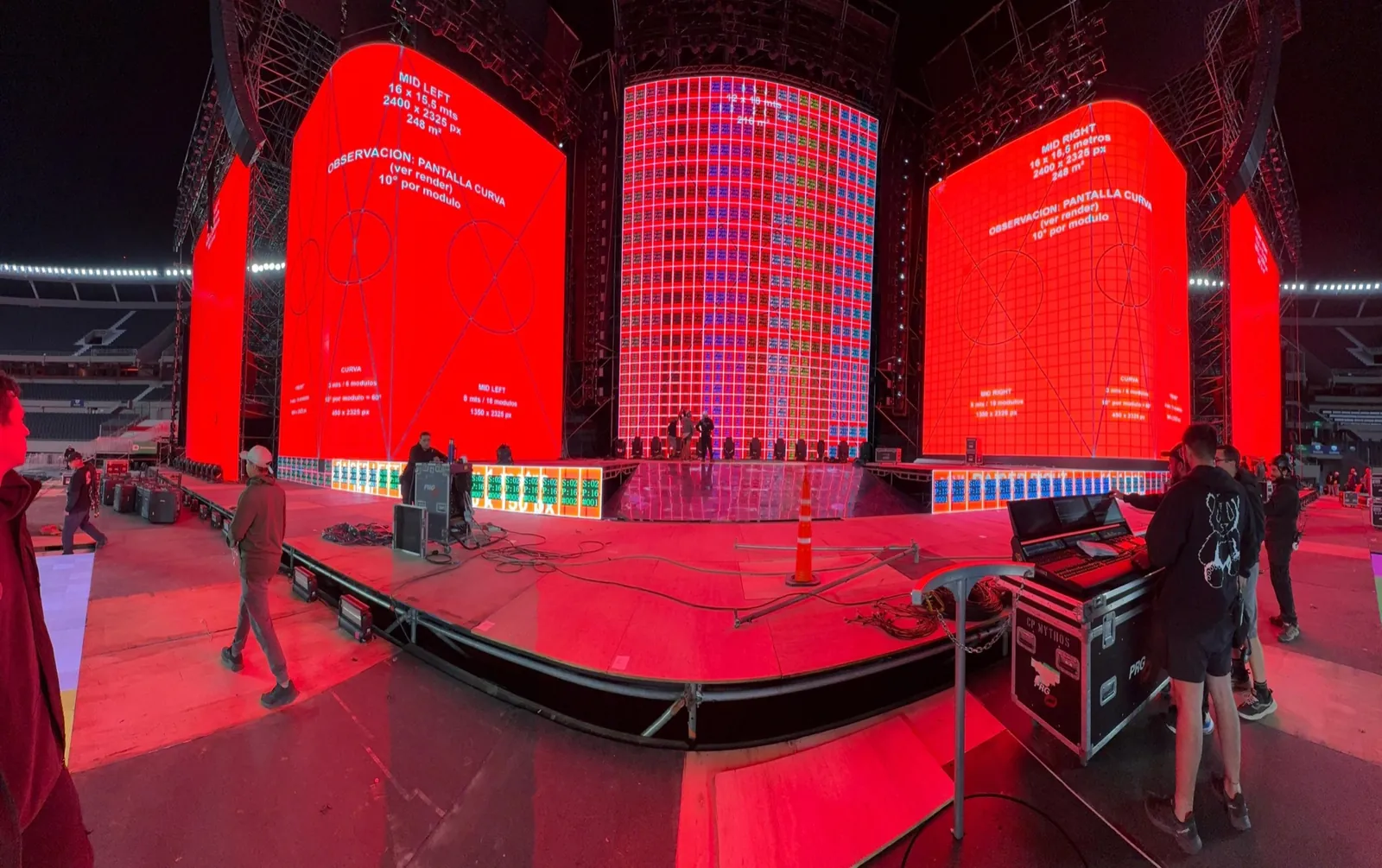
At our Miramar warehouse, we prepare company-owned LED panels and Georgia Expo pipe and drape, along with staging, video, lighting, rigging support, power distribution, cameras, intercom, media servers, computers and cabling. We plan the sound system with the rest of the equipment, including large-format and arena-scale audio when the event requires it.
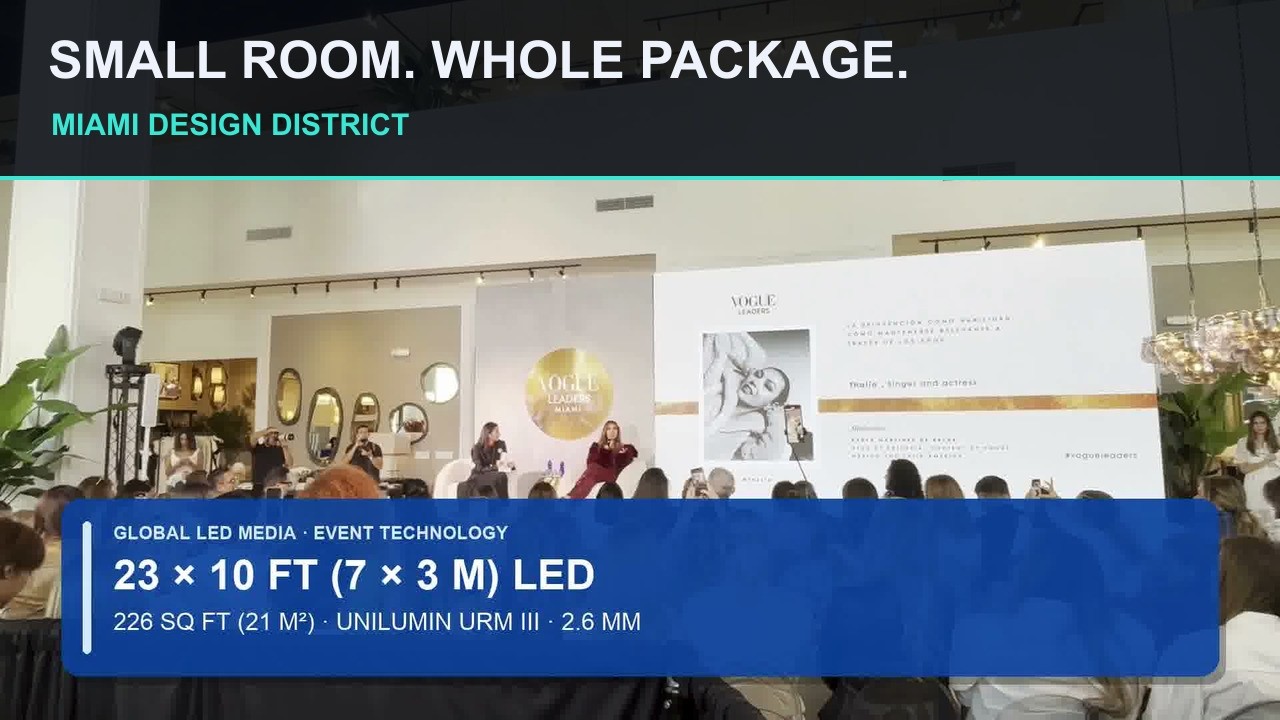
GLMedia supplied LED video, staging, audio and lighting. See the finished setup and the documented scope of the project.
See the work →We build the AV plan around your program, the equipment you need and the venue.
Our technical team installs, connects, tests and operates the systems included in your proposal. These can include LED walls and floors, projection, media servers and Resolume playback, cameras and PTZ systems, video switching, recording, streaming, sound, lighting and staging. Pipe and drape, rigging coordination, power distribution, confidence monitors, timers, tablets and intercom can be added as needed. We agree on setup and strike times, rehearsal, operator hours and who calls the show cues. If your team handles part of the job, we define the connections and handover with them. The proposal is built around your program, audience, content and venue rules.
We start with our own LED inventory and Georgia Expo pipe and drape, plus the staging, lighting, video, processing, power, camera, control and cabling systems we maintain in Miramar. If the project calls for additional equipment, a specific brand, large scenic elements or licensed rigging, we confirm availability and qualified partners before quoting. The proposal brings together the selected equipment, crew services and schedule so you can evaluate the complete setup.
Yes. You can bring us in for LED equipment, a video team, technicians or several coordinated services, with your producer or technical director leading the project. Tell us what your team has prepared and where you need support. We coordinate technical decisions and end-client communication with your contacts; we can also work under your production company’s brand while respecting that relationship. If you are organizing the event directly, we help define the AV plan, crew and services you need to put it into practice.
We can prepare AV production at hotels and venues that allow outside providers. Share the venue requirements and your event contact if you have them. We review loading-dock appointments, freight-elevator dimensions, setup and strike windows, crew access and requested insurance documentation (COI). We identify required house services, such as rigging, power, internet or labor, so their booking and costs can be included in your event planning.
The price depends on the date, venue and access, the equipment assigned to your event, the screen dimensions and layout, and transportation. To quote the crew, we review the setup, rehearsal, operating and strike hours. We also agree on how content will be prepared and played back, along with power and rigging requirements. The calculator helps you compare options while planning; its figures are not a final quote or a confirmed booking. After reviewing these details, we send a written proposal listing the equipment, services and booking terms.
We prepare the AV equipment, crew, installation, rehearsals and operation you need. We work with your organizer or planner to fit that work around the program, venue booking, guest arrival, catering and performances. You can also bring us in for a single system or part of the technical production under your producer’s direction.
Send the date, city or venue, event type and estimated audience size. Tell us which equipment or services you need and whether your crew will handle setup and operation. If the details are still taking shape, we can start with what you know.
The button opens Contact with this service option as an editable reference. Name, email and a message are required; you can inquire before the date, venue or models are final. Nothing is sent until you submit the form.
Technical production for vehicle reveals →
Before you book
Send the date, venue and program. If the floor plan or dimensions are not ready, we can start with the information you have.
Screen size, resolution, sound, lighting and stage requirements, with models and quantities identified in the proposal.
Crew for each system, rehearsal and operating hours, load-in and strike, brought together in one schedule.
Access, power, internet, COI and exclusive hotel services. Third-party venue charges are identified separately.
Signal sources, playback, spare equipment and backup options matched to the program and budget.
You can add an operator for rehearsals and the event, or choose delivery and setup for your own team to operate. Share the schedule, including breaks and the expected finish, and tell us what needs operating: microphones, presentations, playback, cameras or other systems. We can then propose the crew and hours needed. If your team will operate, we arrange the system handover and support before the event. Let us know about schedule changes so we can check availability and the cost of additional hours.
When two rooms need active operation at the same time, each position needs its own operator. A panel discussion with microphone changes, remote guests and recording needs continuous attention; a screen playing a video loop may need only occasional support. Send the agenda for each room, including overlapping rehearsals and sessions. We can identify where dedicated operators are needed and where shared support works, with a contact in each room and a clear way to reach the technician. Setup crew and session operators are quoted according to their tasks and hours.
We plan rehearsal time around the running order, number of speakers, videos, presentations and remote guests. First we test the equipment, then rehearse with the people taking part. Along with checking that a video plays correctly, we run through when it starts, who gives the cue, what happens to the microphones and what appears next on screen. We coordinate room access and time with presenters, operators and the person calling cues. If their time is limited, we can focus the rehearsal on sequences that need them.
First, check that both quotes cover the same job. Compare screen dimensions and resolution, equipment models and quantities, rental dates, delivery, installation, removal and operator hours. Then check what sits outside the total: taxes, venue power, internet, house rigging or other required services. Ask whether rehearsals, spare equipment and backup options are included or priced separately. Equipment only can be the right choice if your team will handle setup and operation; it is a different service from a fully operated package. If you need to reduce the budget, tell us which parts matter most so we can explain the trade-offs. We can explain each item in GLMedia’s proposal and help you compare the options.
Share the dates, available room plans and what changes between editions. We can document the usual equipment setup, content format, contacts and installation sequence. We check availability and schedules for each date. After each event, we can review actual attendance, technical changes and any needed adjustments with you to prepare for the next edition.
We can help prepare an up-to-date room plan and a list of each provider’s equipment, connections and operators. For video, we identify every source and destination, including the signal format and connection at each handover. A signal-flow diagram makes those routes easier to check. We add the audio feeds, power requests, cable routes, content versions and cue list relevant to the job. We date revisions and coordinate change approval with the technical contact. If a laptop, stage position or camera feed changes, we share the update with the teams involved before rehearsal. We agree on the documents and handover checks with you; if you need a full production drawing package, we can include that work in the proposal.
You can choose whether Google Analytics and Google Ads measure visits and actions on this page. Service information and inquiry links work with either choice.
You have not chosen yet: the measurement tag will not load on this page until you accept.