Temporary studio package
LED, playback, processing, cameras, lighting and technical operation for a shoot, campaign, season or defined production window. The system is installed, tested, operated as contracted and removed afterward.
 Get a quote
Virtual production studio rental & turnkey installation · Miami
Rent an LED background, walls and floor for a shoot, or commission a permanent virtual-production studio at your facility. We supply and integrate the equipment; studio space, tracking and content services are confirmed separately for each project.
GLMedia can provide the system as a rental, sell a complete installation or build in phases around the client's room, workflow, team and budget.
Three commercial models
The creative workflow may be similar, but ownership, installation and support are different. GLMedia defines the commercial model before assigning equipment and responsibilities.
LED, playback, processing, cameras, lighting and technical operation for a shoot, campaign, season or defined production window. The system is installed, tested, operated as contracted and removed afterward.
Workflow design, equipment specification and sale, installation, configuration, calibration and end-to-end commissioning at the client's facility. The system is delivered against an agreed acceptance checklist.
The client owns the everyday cameras, control and display infrastructure while GLMedia provides temporary LED area, specialty processing, extra cameras or crew when a larger production requires it.
A practical alternative to location changes
An LED virtual set can place talent inside branded graphics, architectural spaces, landscapes, product worlds or abstract motion while the production remains in one controlled room. The background is visible to the camera and can also contribute interactive light and reflections to the subject.
The result depends on the entire image chain: content resolution, LED pixel pitch, refresh rate, processor settings, camera shutter, frame rate, lenses, distance, lighting and playback must be planned together.
Fast visual changes, performance environments and synchronized playback.
Product worlds, controlled reflections, branded backgrounds and repeatable takes.
News-style desks, sports analysis, interviews, intros and program inserts.
Executive communications, training, product launches and virtual stages.
Live or recorded programs with cameras, switching, monitoring and graphics.
Dynamic backdrops and controllable looks for products, talent and campaigns.
A defined LED and video partner integrated behind the production team.
Proof-of-concept environments before committing to a larger production.
Production options
Start with the shots and the content. A playback background may be enough; a scene that changes perspective with the camera needs compatible tracking, rendering and specialist operators.
Pre-rendered motion, stills or branded content displayed behind talent. Camera-ready LED, playback and processing are synchronized, but the background does not need to change with camera movement.
Two or more LED planes share mapped content to surround the subject with image. Perspective is designed for the planned camera angles and performance area.
When perspective must respond to camera movement, the project requires compatible tracking, a real-time render engine, content prepared for that workflow and qualified virtual-production operators. These elements are quoted only when confirmed.
Lighting, cameras, keying, monitoring and post-production interfaces can be planned for chroma-key projects. Studio space, virtual assets, live keying and post are defined as separate deliverables.
A GLMedia project
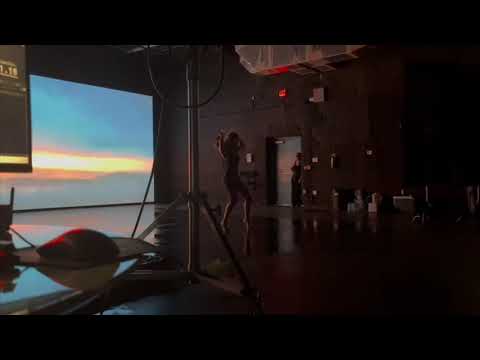
A shoot in Miramar combined two Unilumin URMIII P2.6 LED walls with a walkable Unilumin UDF P5.2 LED floor, studio lighting and multi-camera capture. Approximately 409 sq ft (38 m²) of image was mapped across three planes.
That production used Sony FX30, Sony FX9 and Panasonic PTZ cameras. The project page shows the configuration and GLMedia’s technical work.
What a quoted set can include
Flat, curved or multi-plane Unilumin walls and walkable LED floors, sized for the composition, camera distance and movement area.
Pixel map, aspect ratio, safe areas, deliverable specifications, content tests and playback format for each LED surface.
NovaStar processing, signal distribution, mapping, scaling, synchronization and project-specific redundancy.
Disguise, Resolume and other approved playback workflows selected according to output count, resolution, cueing and show-control needs.
Sony, Canon PTZ, Blackmagic ATEM, OSEE, vMix, recording, multiview and monitoring allocated according to the approved project.
Studio lighting, technical operation, system alignment, rehearsals and crew roles coordinated around the camera plan.
What must be defined before the quote
A scene reference is a starting point—not a technical specification. GLMedia confirms what is live, pre-rendered, tracked, composited or finished in post before assigning equipment and responsibility.
References, scene list, aspect ratio, final framing, content provider, playback files, color pipeline, licensing, branding and who approves the image.
Camera count, lenses, frame rate, shutter, movement, tracking needs, talent positions, floor use, sound recording and whether the set must work from several angles.
Studio or location, dimensions, access, power, HVAC, ambient light, floor loading, rigging, build time, rehearsal, shoot length and strike window.
Live program, isolated records, edited master, streaming destinations, post-production, virtual assets, real-time rendering, specialty operators and backup requirements.
A production-ready sequence
The most efficient set begins with the intended shot and final deliverable. LED dimensions and content are then designed around what the camera must see.
References, story, shots, talent, backgrounds and final destinations.
LED geometry, camera angles, pixel map, processing, playback, lighting, power and responsibilities.
Installation, alignment, content checks, camera tests, color, moiré, exposure and rehearsal.
Technical operation, cueing, recording, media verification, strike and agreed deliverables.
Frequently asked questions
No. Many productions use camera-ready LED backgrounds with pre-rendered video, stills or mapped content and do not require camera tracking. Camera-tracked real-time environments are a different workflow and require compatible tracking, render systems, content and qualified operators. GLMedia confirms which level is included before quoting.
Yes. GLMedia has documented a Miramar production environment using two Unilumin LED walls and a walkable Unilumin LED floor, with mapped content, studio lighting and multi-camera capture. The geometry, load, access, power and content workflow are engineered for each project.
A set can display branded graphics, architectural environments, landscapes, abstract motion, product worlds, broadcast graphics or custom pre-rendered scenes. Content creation, licensing, playback format and real-time rendering are separate deliverables and must be identified in the proposal.
Yes. LED sets can support music videos, commercials, interviews, product demonstrations, executive communications, news-style segments, sports commentary, social content and streaming. The technical design changes with camera distance, lens choice, sound requirements, talent movement and intended deliverables.
Yes. A contracted scope can include LED, playback, video processing, cameras, switching, lighting, monitoring, recording and technical crew. Audio, specialty cameras, tracking, real-time render systems, studio space and post-production are confirmed by project rather than assumed.
Yes. GLMedia can quote a temporary equipment rental for a shoot, a turnkey permanent studio sold and installed at the client's facility, or a hybrid system that combines a client-owned core with rental expansion. A permanent handoff can include system design, equipment supply, installation, configuration, commissioning, documentation and operator training. Exact ownership, construction interfaces, warranties, support and acceptance tests are defined in the proposal.
Rental, purchase or phased build
Send the location, date and type of production. Add dimensions, references or existing equipment if available. We will propose a rental, permanent installation or expansion.
No, unless filming is listed in the proposal. A screen can display a presentation without any cameras. If you need live camera images, a recording or a stream, tell us the destinations and deliverables. We define cameras, switching, audio feeds, recording, operators and file delivery separately, so displaying the event and producing a recording are not confused.
Ask for the final screen pixel map and playback requirements before exporting. Send the presentation with its fonts and linked media, and provide original video files rather than messaging-app previews when possible. Label the final version and the playback order. We check resolution, aspect ratio, audio and cue points; editing or creating content is a separate task unless included.
It depends on the program. Send the number of speakers, presentations, videos, remote guests and live cues. A simple slide presentation and a multi-camera show need different preparation. We plan time for content checks, microphones, transitions and the people who call or perform the cues. Rehearsal needs access to the actual room and relevant presenters, not only the equipment.
Only if the shots call for it. A ceiling can provide moving light and reflections from above, or enter the camera frame; a wall and a walkable floor serve different positions in the scene. Decide with the camera and lighting teams what must appear in the shot and what only needs to illuminate the subject. That avoids adding a surface with no clear purpose. Overhead LED requires suitable equipment, a reviewed suspension design and qualified personnel; a panel used on a wall is not automatically suitable overhead or underfoot. Send the shot list, camera movements, available height and reference images. We review any ceiling requirement separately. Our documented Miramar shoot shows two LED walls and a floor, not an LED ceiling.
It can. Depending on the equipment, fans in the panels, processors or playback computers may be audible near a microphone. Air conditioning and lighting can add noise too, so a screen described as quiet does not make the whole set quiet. Tell us if you are recording dialogue, where the microphones and talent will be, and whether the equipment can sit outside the recording area. Include a sound check with the system running long enough to reach its normal operating temperature. That gives the sound team a more useful test than listening just after power-up. Equipment placement and microphone choice may help; ventilation must remain clear. Any low-noise requirement should be part of the brief before equipment and room layout are confirmed.